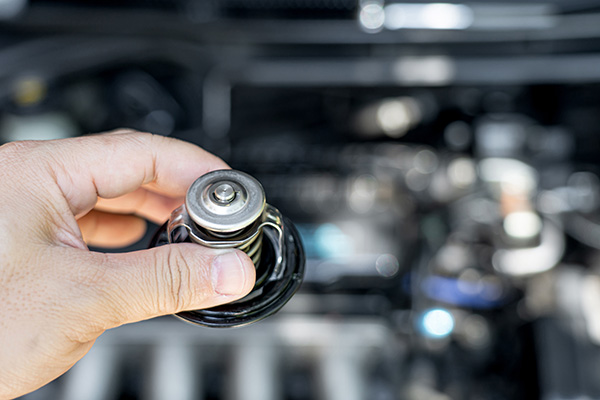
A thermostat is a small part that can cause big confusion when it starts acting up. Your car might run cooler than usual, or it might start creeping hotter in traffic, and the symptoms can feel inconsistent. One day everything looks normal, the next day the temperature gauge does something that makes you nervous.
A stuck thermostat is a common cooling system issue, and the warning signs usually show up before the engine truly overheats. If you know what to watch for, you can catch it early and avoid the kind of heat stress that leads to expensive repairs.
What The Thermostat Does In The Cooling System
The thermostat controls coolant flow between the engine and the radiator. When the engine is cold, the thermostat stays closed so the engine warms up quickly. Once the engine reaches operating temperature, the thermostat opens to let coolant circulate through the radiator and control heat.
When it works correctly, the temperature gauge stays steady after warm-up. When it sticks closed, the engine can overheat because coolant is not flowing the way it should. When it sticks open, the engine may run too cool, which can affect fuel efficiency and cabin heat.
A Temperature Gauge That Acts Unusual
A thermostat issue often shows up on the temperature gauge first. If the gauge rises above normal, especially in traffic or while climbing hills, a stuck thermostat is more likely.
If the gauge stays low even after several miles of driving, the thermostat may be stuck open. Some drivers notice the gauge taking far longer than it used to to reach its usual spot. Others notice it never reaches that spot at all.
If the needle swings up and down in an unusual way, it can also point to a thermostat that is intermittently sticking. The cooling system should not behave like a yo-yo.
Cabin Heat That Does Not Match The Engine Temperature
Your heater uses engine heat. If the thermostat is stuck open and the engine runs cooler than normal, you might get weak cabin heat, especially at idle or in cold weather. It can feel like the heater never really gets going.
A thermostat stuck closed can create the opposite situation. The heater might blow very hot air at first because the engine is overheating, but this is not a reliable test on its own. Cabin heat can also be affected by low coolant, air pockets, or heater core issues.
Still, if weak cabin heat pairs with a temperature gauge that sits low, a thermostat stuck open is a strong possibility.
Overheating That Shows Up In Stop-And-Go Driving
A thermostat stuck closed often shows itself in traffic. The engine builds heat, but the coolant cannot circulate properly. You may notice the temperature creeping up when you are idling, then dropping slightly when you start moving again.
That pattern can also point to radiator fan issues, so it is important to confirm the cause. If the cooling fan is not coming on when it should, the engine can overheat at idle even with a healthy thermostat.
This is why inspection matters. Two different problems can create a similar symptom, and the fix is very different.
Coolant Level Changes And Related Cooling System Clues
Low coolant can mimic thermostat problems because it reduces the system’s ability to move heat. If coolant is low, you may see the gauge fluctuate, cabin heat change, or overheating under load.
If you have to top off coolant repeatedly, there is likely a leak somewhere. A thermostat might still be part of the story, but leaks should be addressed first. Also, if you see coolant residue near hoses or smell a sweet odor after driving, those are clues that the cooling system needs inspection.
We’ve seen thermostat concerns that turned out to be caused by a small coolant leak. Fixing the leak and the thermostat together prevented repeat overheating issues later.
Warning Lights And Messages You Should Take Seriously
Some vehicles will trigger a temperature warning or a check engine light when the thermostat is not behaving correctly. A thermostat that is stuck open can sometimes trigger a code because the engine is not reaching the expected temperature fast enough. A thermostat stuck closed can trigger overheat warnings.
If you see a dashboard warning about temperature, stop treating it as a minor annoyance. Engine overheating can warp components and lead to expensive repairs quickly.
If you see steam, smell hot coolant, or notice the gauge climbing rapidly, pull over safely and shut the engine off. Continuing to drive while overheating is one of the fastest ways to turn a manageable repair into a major one.
Why Thermostats Fail And What Usually Comes With The Repair
Thermostats wear out due to age, corrosion, and heat cycles. The spring and valve can weaken or stick. In some designs, the thermostat housing can also degrade or crack.
When replacing a thermostat, it is common to inspect related components, such as hoses, coolant condition, and the water pump area for leaks. A refill and proper bleeding of the cooling system is also important, because air pockets can create overheating symptoms even after a new thermostat is installed.
Get Cooling System Service in Ft. Collins, CO, with Community Auto
We can inspect your thermostat operation, check coolant level and condition, and confirm whether the issue is a thermostat, a fan problem, a leak, or another cooling system concern. We’ll explain what we find and recommend the repair that restores stable engine temperature and reliable cabin heat.
Call Community Auto in Ft. Collins, CO, to schedule cooling system service and avoid overheating surprises.