A car that starts perfectly in the morning and then refuses to restart after a normal drive can be especially confusing. You stop for fuel or groceries, come back ten minutes later, turn the key, and either the engine cranks but won't start or barely cranks at all. Leave it sitting longer, and suddenly it starts again.
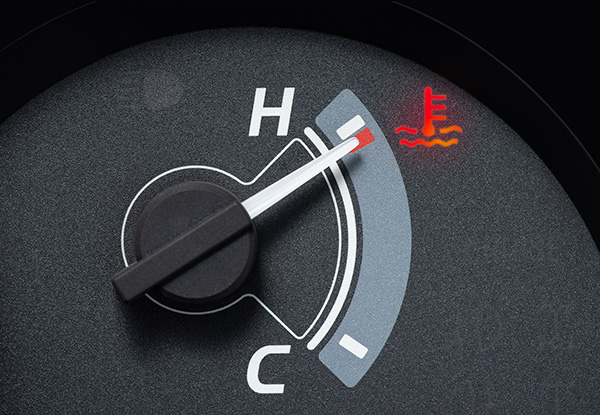
Here, hot means the engine has reached its normal operating temperature. We are not talking about an overheating engine. The difference matters because several electrical, fuel, and sensor problems only show themselves after heat builds under the hood.
The Starter Can Struggle After Heat Builds
If you turn the key and the engine cranks very slowly, clicks once, or does nothing until the car cools down, we start by looking at the starting circuit. Starter motors and solenoids live close to a hot engine and exhaust system, and worn internal parts can become less reliable as temperatures rise.
At our shop, we compare battery voltage, cable voltage drop, and starter current when the problem is actually happening. A starter can work perfectly during a cool morning test and fail after a 30-minute drive. That is why replacing the battery just because the car will not crank is not always the right first move.
A Crankshaft Sensor Can Quit When It Gets Hot
The crankshaft position sensor tells the engine computer how fast the engine is turning and where the crankshaft is in its rotation. Without that signal, the computer may not command spark or fuel injection correctly.
Some failing sensors work when cool and stop producing a clean signal once they heat up. The engine will still crank at normal speed, but it will not start. Then, after sitting for 20 or 30 minutes, the sensor cools enough to work again. Watching engine RPM on a scan tool during the no-start gives us a valuable clue. If the computer sees no crankshaft speed while the engine is clearly turning, the sensor or its circuit deserves closer attention.
Fuel Pressure Can Drop After Shutdown
A hot restart also depends on fuel pressure being available when you turn the key again. A weak fuel pump, leaking injector, bad pressure regulator, or check valve problem can allow fuel pressure to fall too quickly after the engine is shut off.
The result can be extended cranking or a start that takes several attempts. Sometimes cycling the key before cranking makes the engine start easier because the fuel pump gets another chance to build pressure. That does not repair anything, but it tells us where to keep looking. A pressure gauge can show how quickly the system builds pressure and whether it holds after shutdown.
A Purge Valve Can Flood a Warm Engine
The EVAP purge valve controls fuel vapors moving from the charcoal canister into the engine. If that valve sticks open, too much vapor can enter the intake after the engine is shut off.
Warm restarts can then become difficult because the mixture is too rich. You might notice longer cranking, a brief rough start, or a fuel smell when the engine finally catches. We see this type of problem more clearly after refueling on some vehicles, which is another detail worth mentioning when you bring the car in. A purge valve should be tested rather than replaced just because the symptom happens after a stop.
Electrical Connections Can Change With Temperature
Battery terminals, ground cables, starter connections, relays, and wiring all deal with heat and vibration. A connection with internal corrosion or excess resistance can behave one way when cool and another after the engine bay reaches operating temperature.
One thing we check is voltage drop while the circuit is under load. A cable can look clean from the outside yet lose too much voltage internally when the starter pulls heavy current. Regular maintenance can catch loose terminals and visible corrosion, but hidden resistance usually needs testing with the system working hard.
Why We Want to See the Car While It Is Acting Up
Intermittent hot-start problems are much easier to diagnose when we can reproduce them. If the car arrives cold and starts ten times in a row, there may be very little evidence of what happened earlier.
A proper inspection can include driving the vehicle until it reaches normal operating temperature, shutting it down, and testing the starter circuit, fuel pressure, crankshaft signal, ignition command, injector operation, and scan data during the failed restart. Tell us whether the engine cranks normally, cranks slowly, clicks, or does nothing. Those details can quickly narrow down several possible causes.
Get Hot Restart Diagnostics In Ft. Collins, CO, With Community Auto
If your car starts normally when cold but refuses to restart after reaching operating temperature, Community Auto in Ft. Collins, CO, can test the starter circuit, sensors, fuel pressure, EVAP system, and electrical connections under the conditions that produce the problem.
Schedule a visit so the hot-start problem can be reproduced and tested before you have to wait for the engine to cool again.